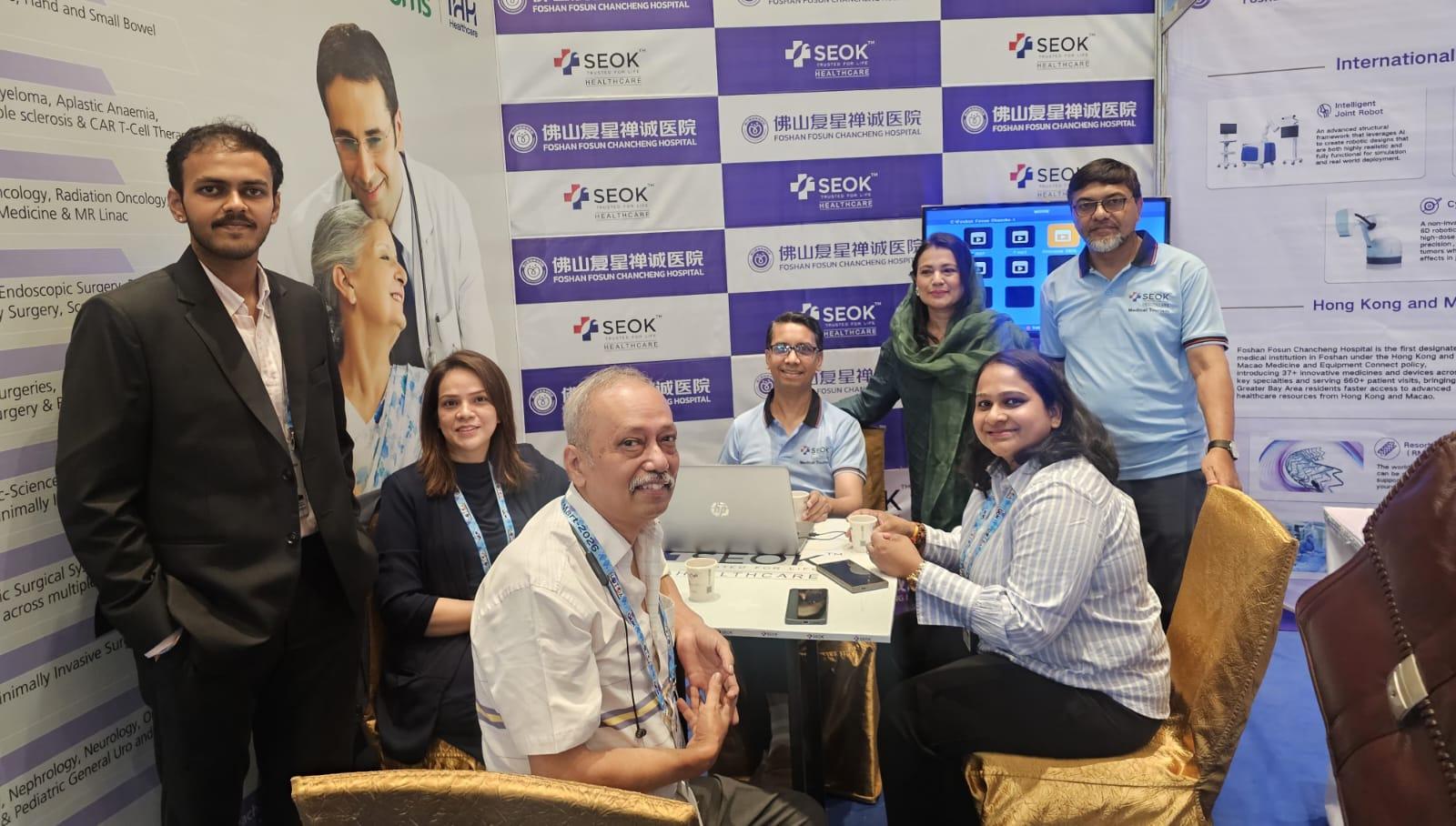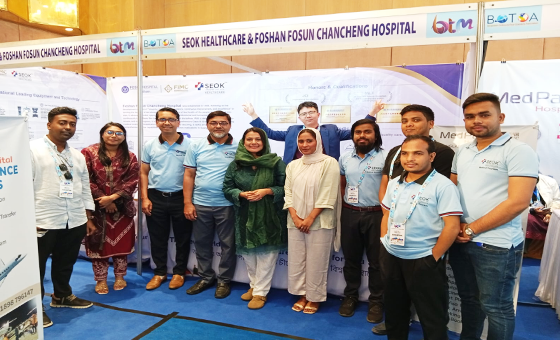



Mosharraf Hossain Raju:
China offers more healthcare possibilities than many Bangladesh families currently realize. CareNavigator helps them understand those possibilities and reach a realistic healthcare pathway before they travel.
1. Why should patients from Bangladesh consider China for medical care?
China has a very large healthcare system. Official figures for 2025 show around 38,000 hospitals and more than 5.2 million licensed and assistant doctors.
Scale alone does not mean every hospital is right for every patient. But it allows selected centres to build deep experience in particular diseases and procedures.
2. What exactly does CareNavigator do?
CareNavigator helps international patients access selected healthcare resources across China.
Our team understands how the Chinese hospital system works. We know that different hospitals and specialist teams have different strengths. When a case needs more than one type of expertise, we can also coordinate resources across different hospitals or clinical teams.
We stay involved throughout the journey. That can begin with organizing medical records and identifying a suitable pathway. We then coordinate hospital and specialist access, appointments, arrival arrangements and support during the treatment process. We can also help with follow-up coordination after the patient returns home.
The aim is not simply to explain the system. It is to help the patient actually reach and use the right resources.
3. How do you select hospitals and specialists?
We work with selected, reliable healthcare resources. We look for hospitals and doctors with relevant experience for the patient's condition, rather than recommending the same institution to everyone.
If a case requires something outside a common route, we can use our understanding of the system to identify suitable hospitals and specialists and help the patient access them.
At the moment, many Bangladesh families still know relatively little about Chinese hospitals. In our experience, many strong Chinese institutions have done limited overseas promotion, so families may only see a small part of what is available.
4. Medical costs are a major concern. How do you address different budgets?
Medical care has to be realistic for the patient and the family.
We do not tell everyone to choose the most expensive route. At the same time, the cheapest option is not automatically the most appropriate one. Where possible, we look at different hospital types and treatment pathways, then explain the practical differences.
For some treatments, China may offer a more manageable cost structure than premium destinations such as Singapore or Western countries. But we do not rely on a general headline comparison. We compare the actual provider estimates for that patient and show clearly what is included.
5. What advanced cancer options are available in China?
Depending on the diagnosis, selected Chinese hospitals may consider options such as proton therapy, CAR-T for specific indications, minimally invasive surgery or a multidisciplinary treatment plan.
CareNavigator does not begin by selling one technology to a patient. We understand how these options are used and where relevant expertise may be available. We take the medical information to appropriate doctors and ask them to advise which direction is suitable for that particular case.
This gives the family a medically grounded recommendation rather than a treatment name taken from an advertisement.
6. Why are Bangladesh visitors so interested in Traditional Chinese Medicine?
Many people here have asked us about Traditional Chinese Medicine. In China, TCM is part of everyday healthcare and is also used alongside Western medicine in selected clinical settings.
We want Bangladesh patients to learn more about qualified programs for pain-related concerns, musculoskeletal discomfort, sleep wellbeing, rehabilitation and longer-term health management.
People with Parkinson's disease, kidney disease or those recovering after cancer treatment may also ask whether TCM has a supportive role. That role should be defined by qualified doctors within a responsible medical plan. We do not present TCM as a universal cure or as a replacement for necessary standard treatment.
CareNavigator can help patients reach suitable TCM physicians and understand how that support may fit into their wider healthcare pathway.
7. How does a patient begin the process with CareNavigator?
The first step is to share a short case summary and the available medical records with proper consent.
We organize the information, identify what may be missing and determine which hospital or specialist pathways should be approached. We then coordinate the relevant review and discuss the available direction with the patient or family.
If the patient decides to come to China, we continue with appointments, treatment coordination and the practical arrangements around the medical journey.
8. Why did you start CareNavigator?
I previously worked on the hospital side in China and spent a lot of time with international patients.
I saw that China did not lack strong medical resources. The problem was that families outside China could only see a small part of the system. They might choose a hospital because of one advertisement, one agent recommendation or one familiar name, without knowing what other options existed.
I started CareNavigator to bridge that gap. We are not limited to representing one hospital. We can look at the patient's actual needs, compare possible routes and bring together resources when one institution alone is not enough.

.jpg)
.jpg)
.jpg)